DATA CENTER FABRICATION
Tate standardizes precision welding across three manufacturing plants
58 cobots. 3 plants. 12× output.
 TATE — 58+ COBOTS, THREE PLANTS
58+
Cobots across three plants
12×
Per-welder throughput
10–20 min
To self-train
1
Tate standard, every plant
Tate · DATA CENTER FABRICATION
All case studies →The Short Version
One standard, running live across every Tate plant
Tate supplies the structural assemblies inside some of the most demanding data center sites in the world. The kind of work where the schedule is fixed, the tolerances are tight, and the volume only grows.
Scaling from one plant to three meant Tate needed a way to enforce a single standard across the network without losing the precision their entire operating model depends on. Hirebotics cobots, running on Beacon, became that standard.
Today more than 58 cobots run across three Tate plants, with output data, weld programs, and Enhanced Playlists shared in real time. Per-welder throughput on the structural assemblies is up roughly twelvefold and the team running the cobots is larger than it was before, not smaller.
Who Is Tate?
120 years of precision — now holding up the world's data centers
Tate is a 120-year-old industry leader in data center infrastructure and raised access flooring, and part of the Kingspan Group. From multiple plants across the country, Tate supplies the structural ceilings, containment systems, airflow management products, and access flooring that hold up the world's largest data center operators. A missed schedule or an off-spec assembly cascades through a customer's launch timeline, impacting business for everyone. Tate's commercial promise is precision delivered at scale, and that standard runs through every part of the operation, including how welding gets automated.
The Challenge
Scaling to three plants without loosening a single tolerance
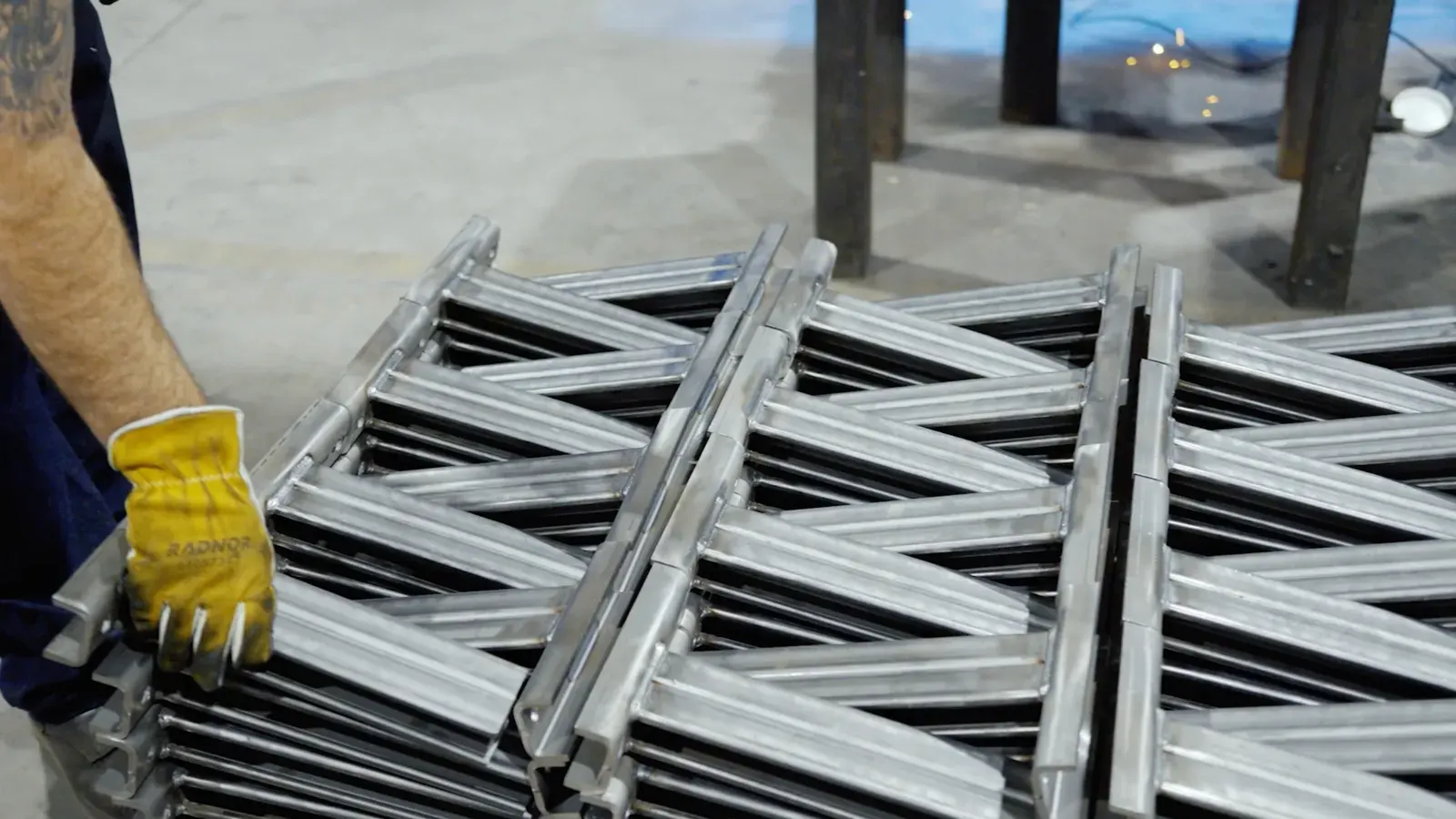
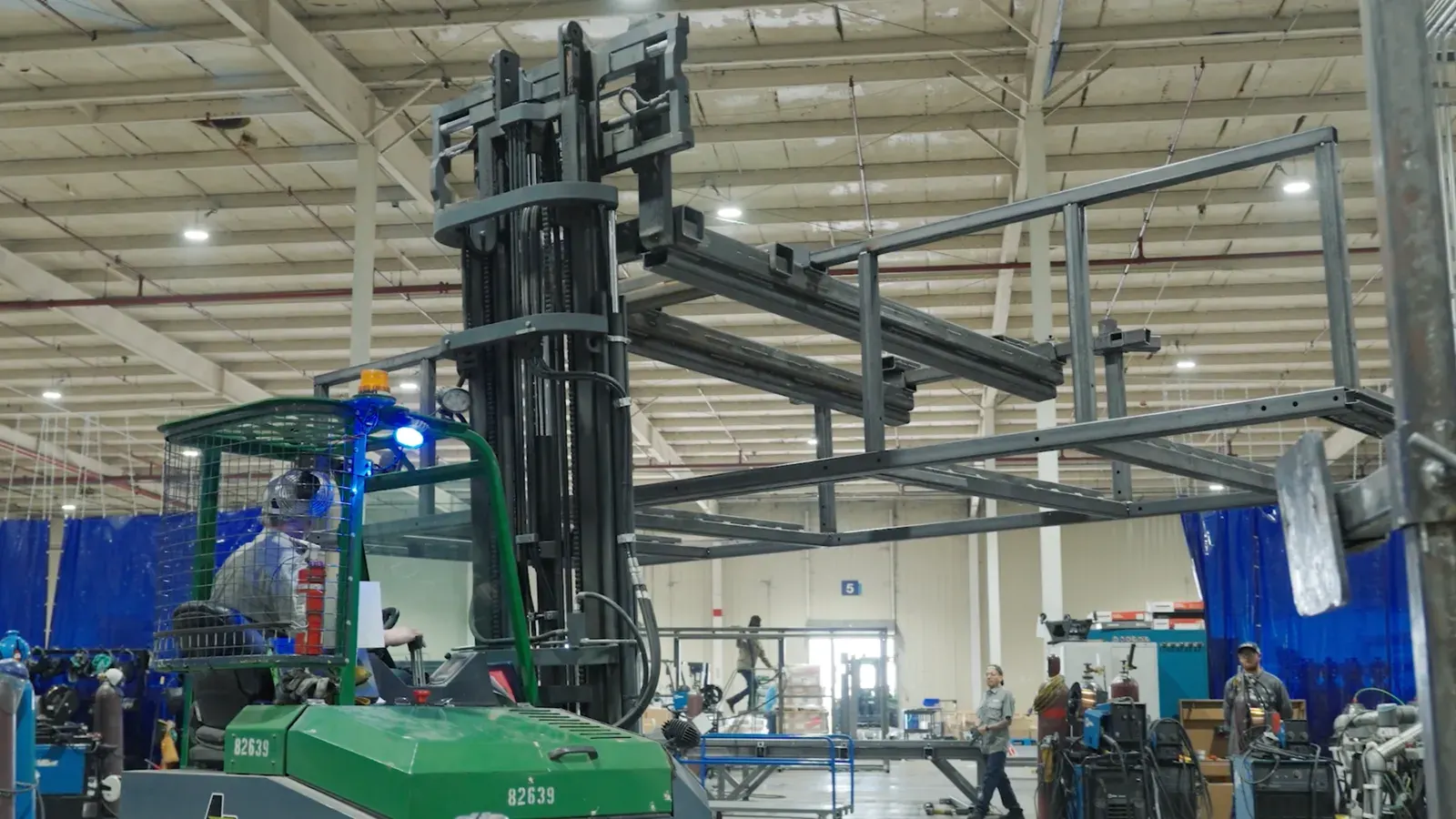
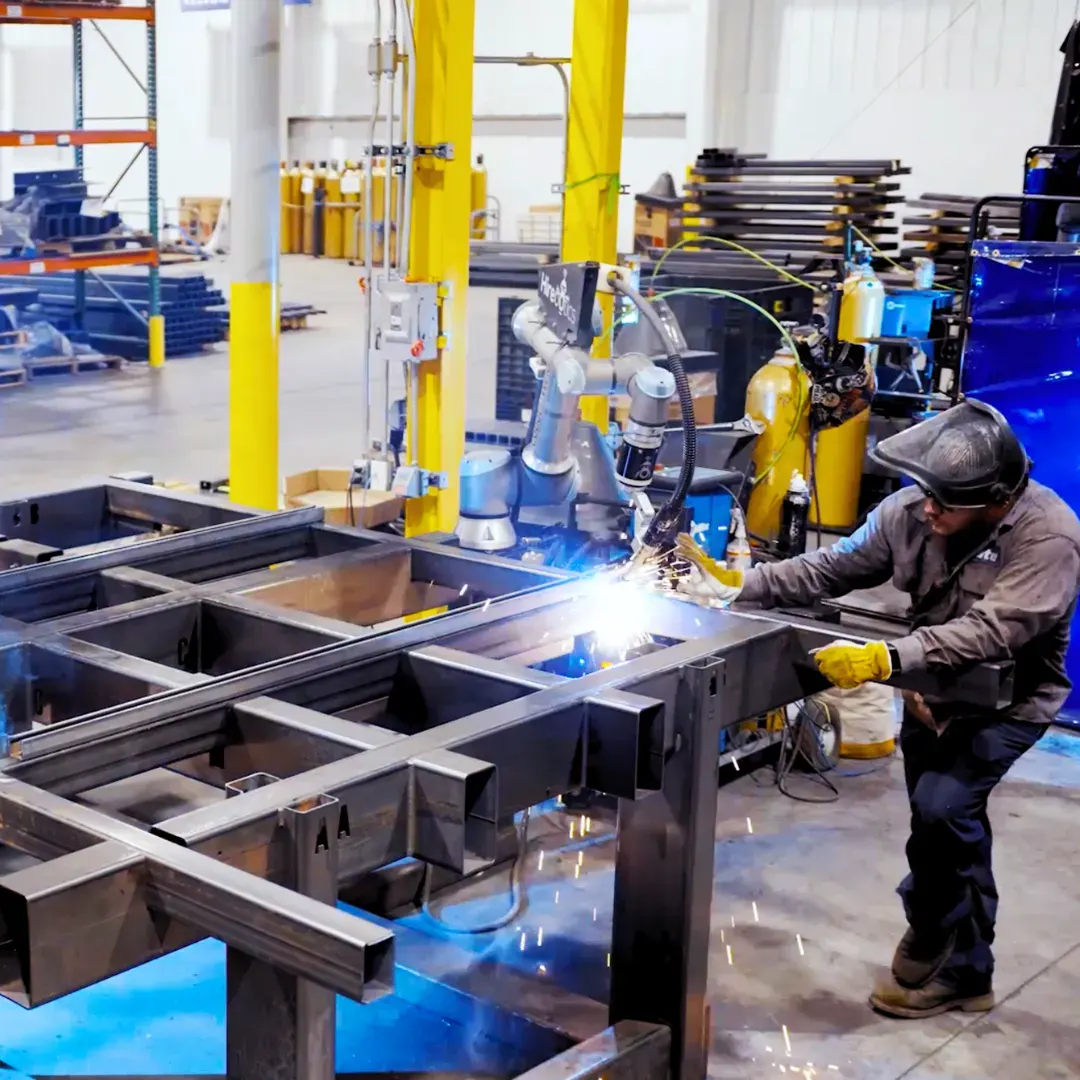
Tate's bet was on scale. Demand from the largest data center customers was growing, lead times were shrinking, and the company was standing up new manufacturing plants to meet it. The challenge was multi-dimensional: each plant builds a different major structural assembly — what Tate calls a "hack," each one welded together from multiple trusses — and those assemblies all have to fit together when they arrive on site. That meant Tate couldn't just buy automation plant by plant. They needed a platform that could enforce a single standard across the network. Hand-welding the structural assemblies wasn't going to hold that line, and across a network of plants, any hour of downtime in one plant compounds through the whole supply chain commitment.
The Solution
The same weld, every shift, in every plant
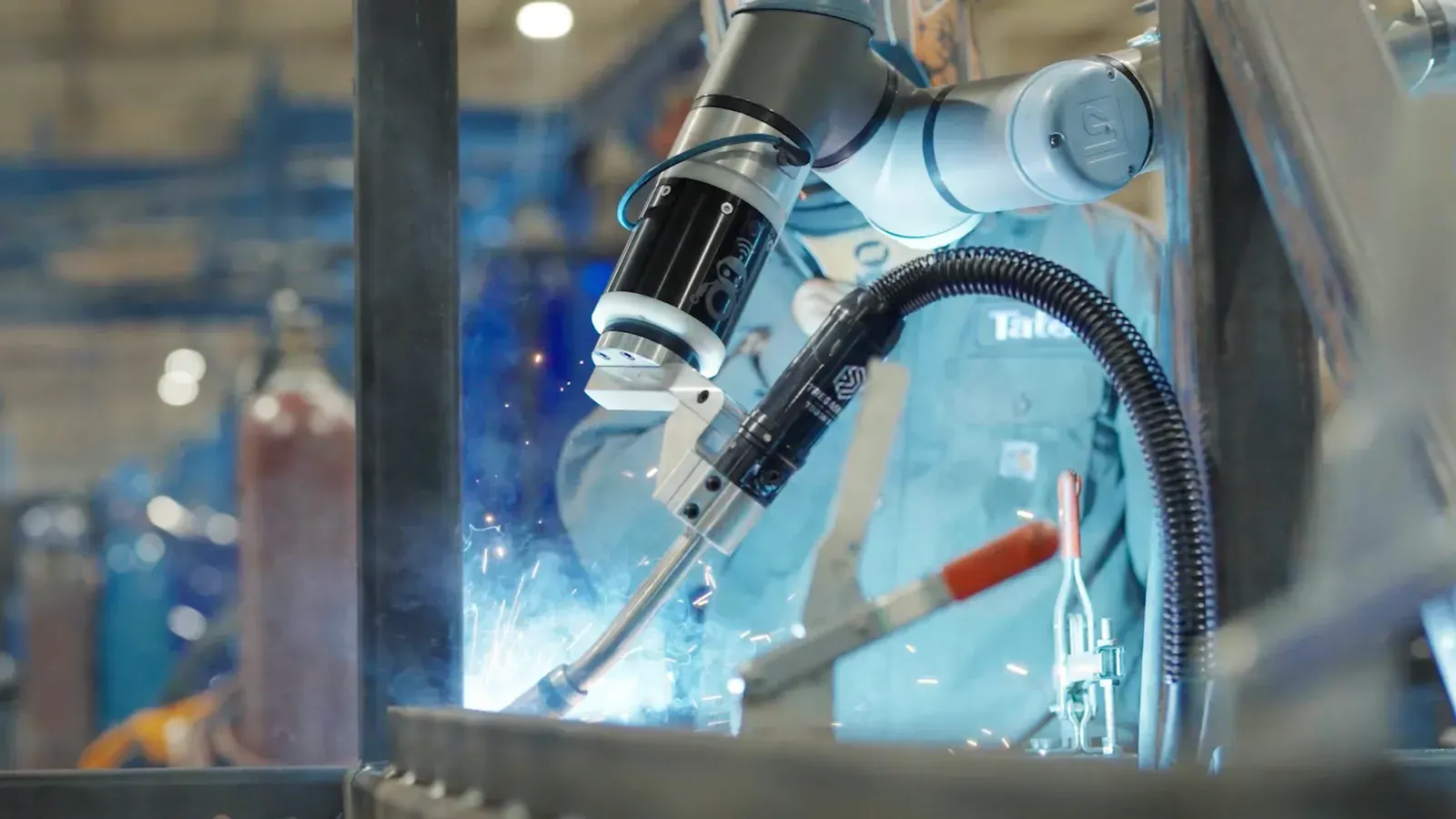
The decision came down to whether to invest in large industrial welding units or cobots. Tate's answer was a hybrid: industrial automation where the volume justified it, and cobots where the work demanded agility, precision, and the ability to flex across plants. For the structural assemblies, cobots became the standard, and in Arkansas, they became the upstream precision step that feeds the industrial robots downstream.
"When we were deciding to build out these new manufacturing facilities to make these structural weldments, we knew we wanted to have some sort of automated welding. And the question was, do you do large industrial welding units or do you use cobots? And what we settled on was a hybrid of both."
– Brad Kampbell, VP of Engineering, Tate
For Shahram Totonchian, the plant manager at Tate's St. Paul, VA facility, the distinction between cobots and the industrial robots Tate runs elsewhere wasn't just about the equipment; it was about who owns the work.
"I have facilities [where] we had robots, not cobots; then I have to tie in programmers. It kind of takes the ownership away from the welders. Cobots [are] the exact opposite – the operators, the welders are the ones actually making the program, and they take more ownership than somebody else who just hands them the program."
– Shahram Totonchian, Plant Manager, St. Paul, VA
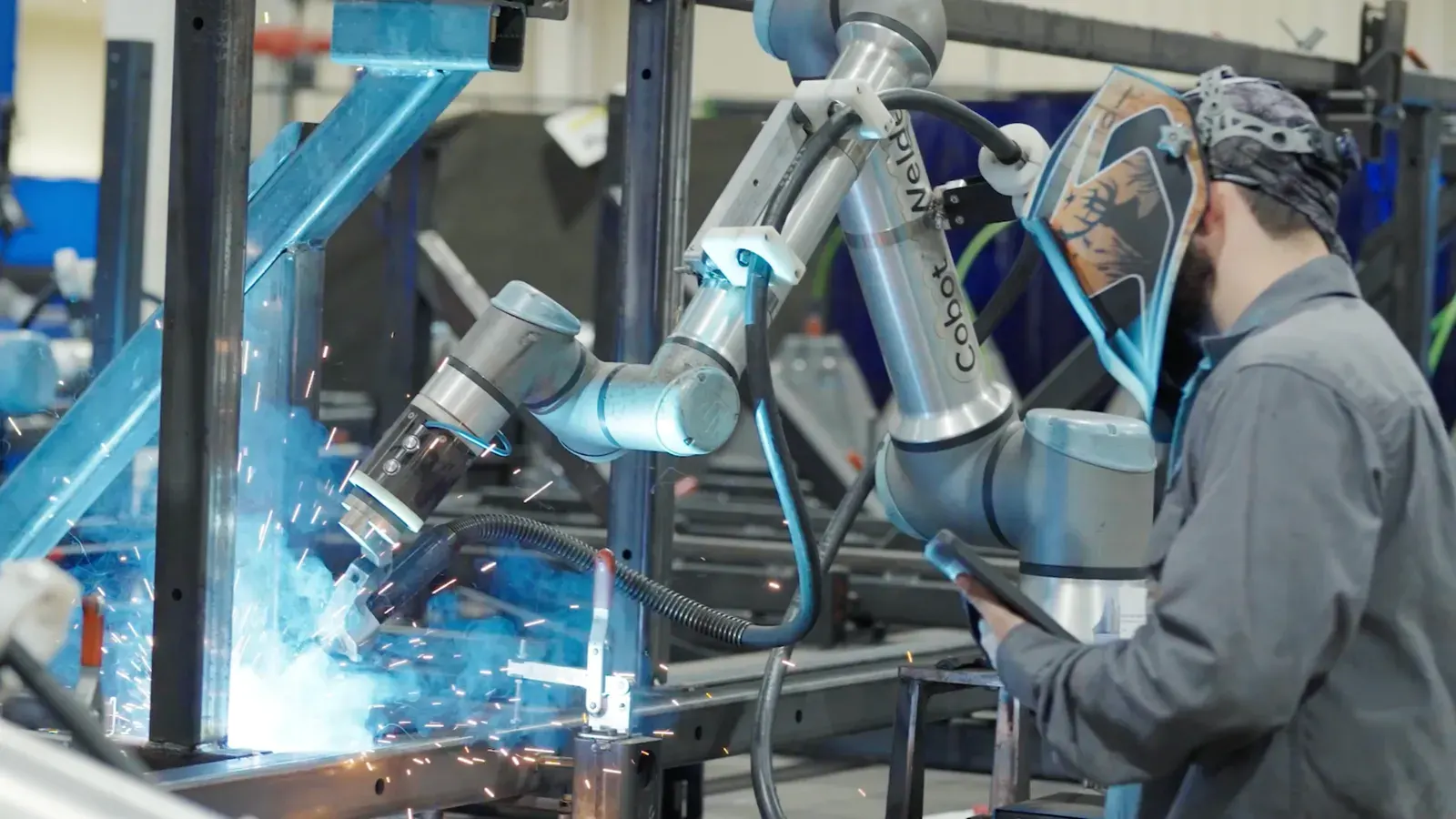
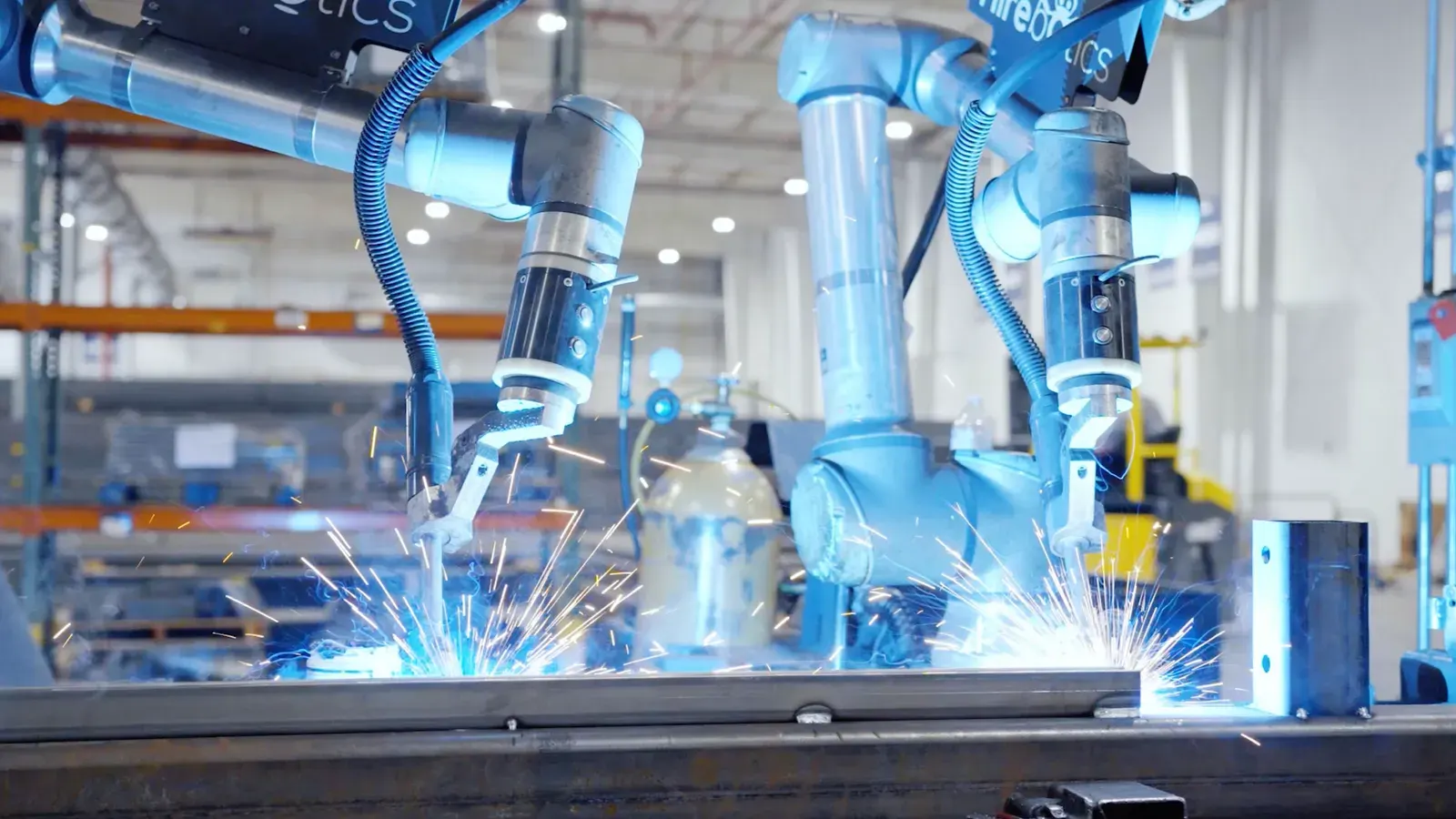
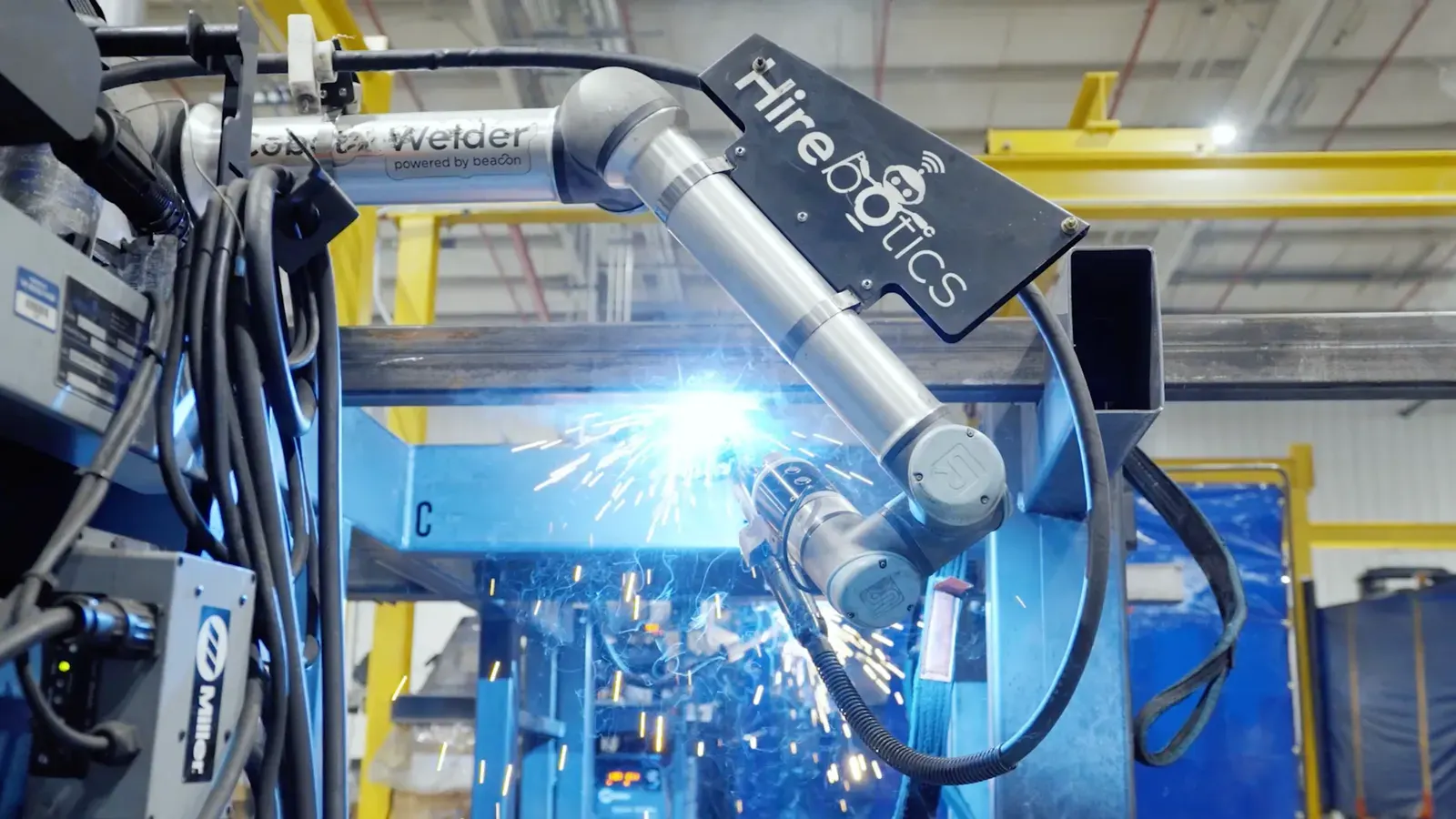
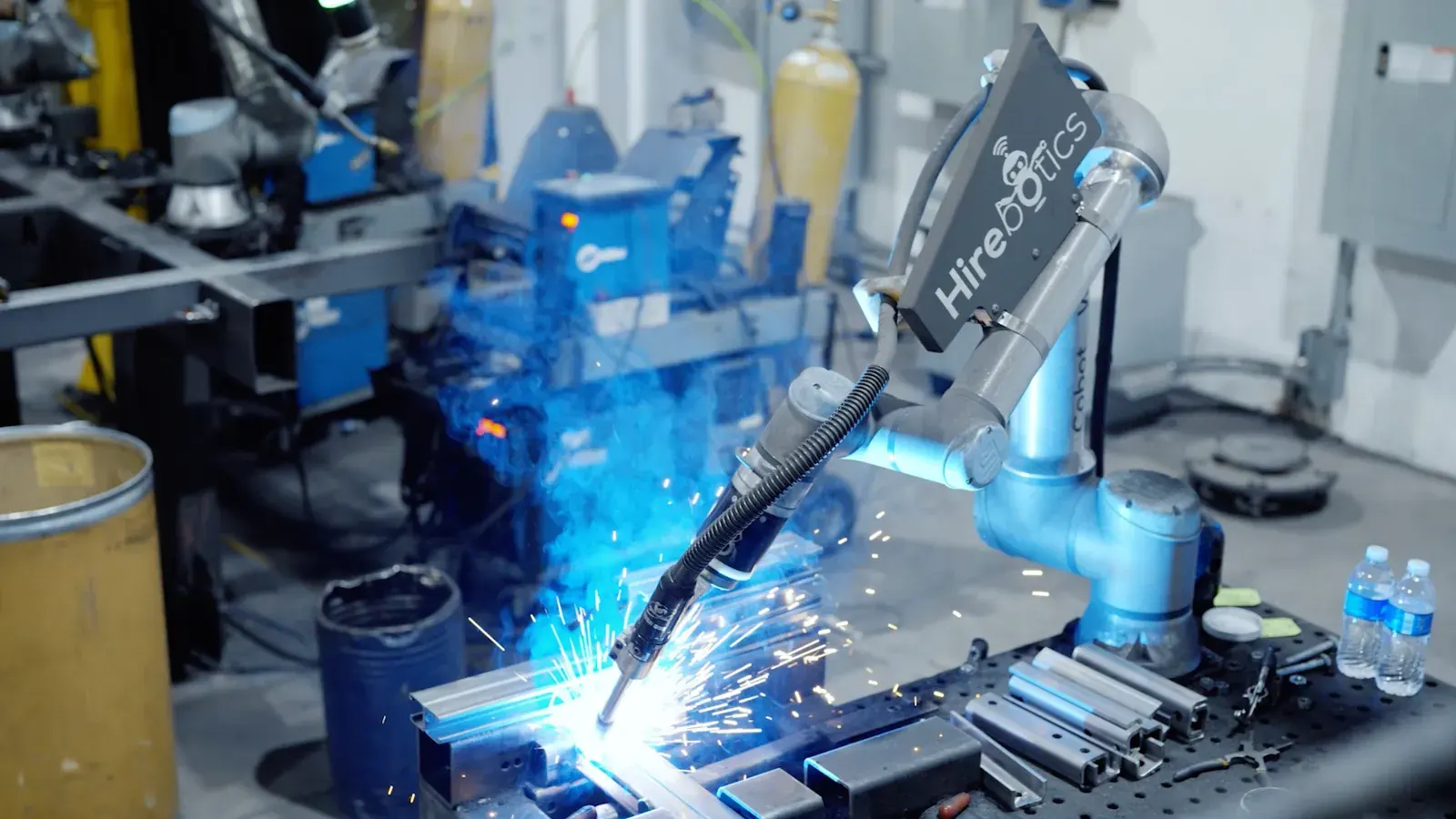
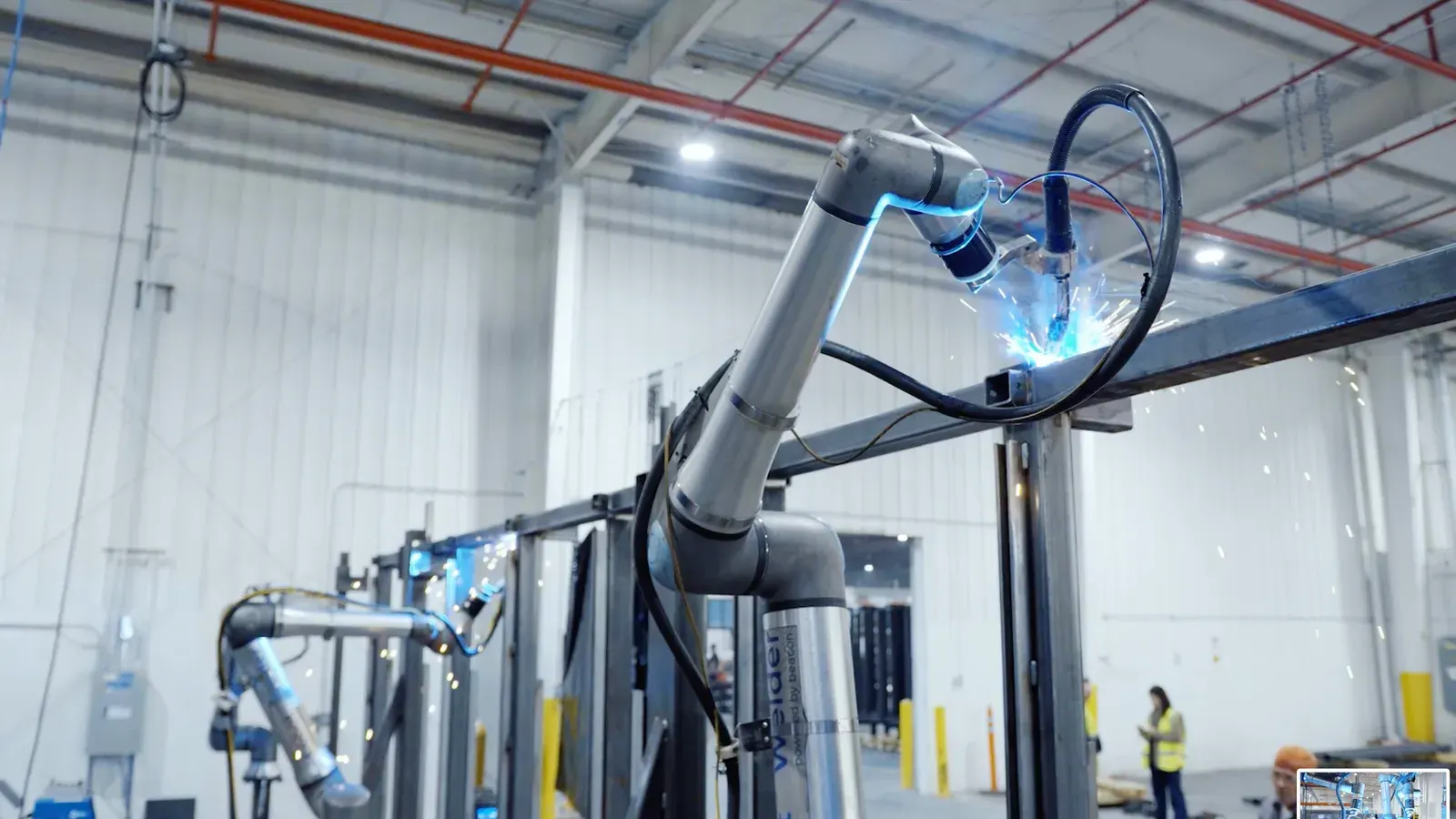
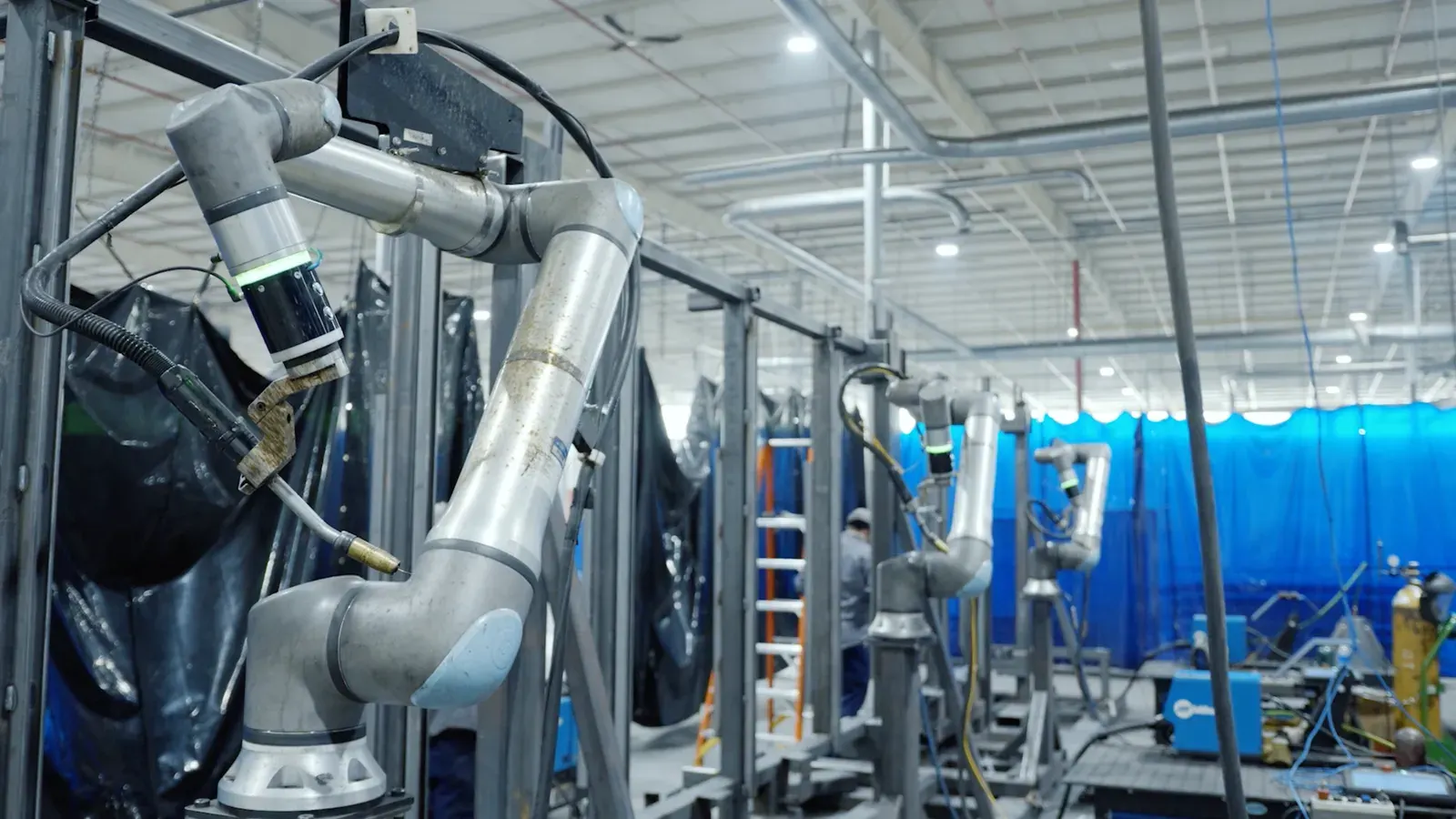
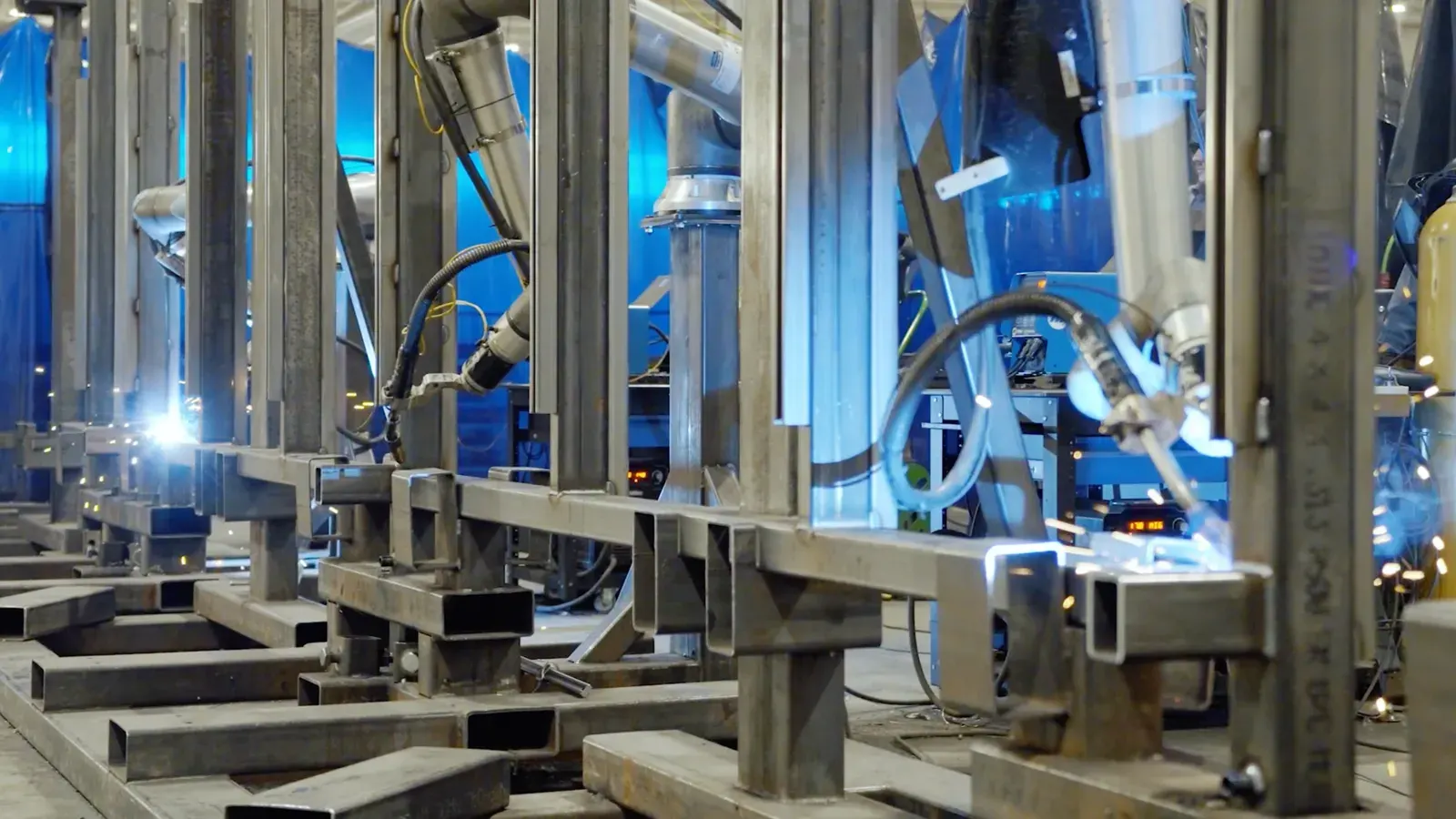
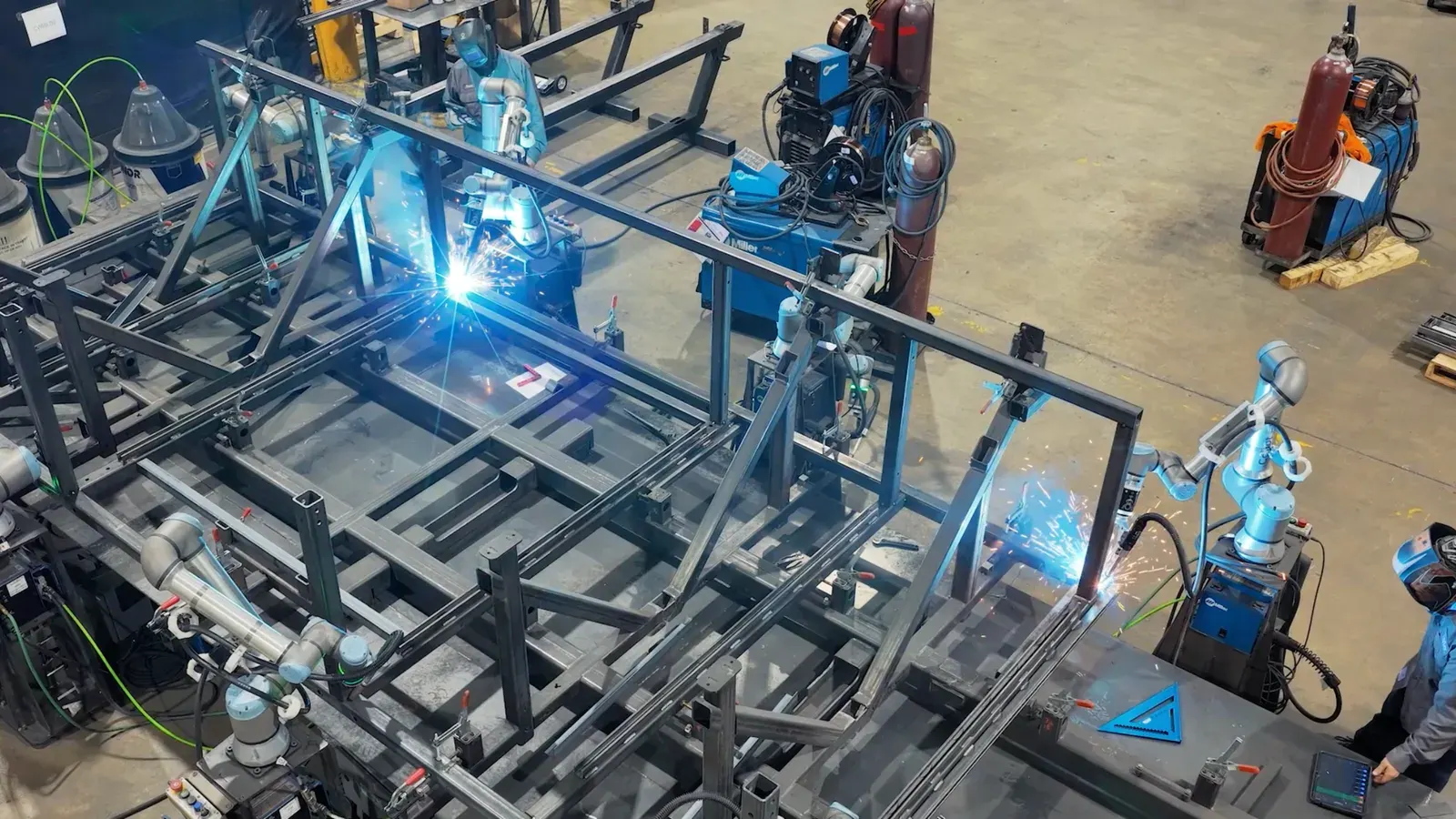
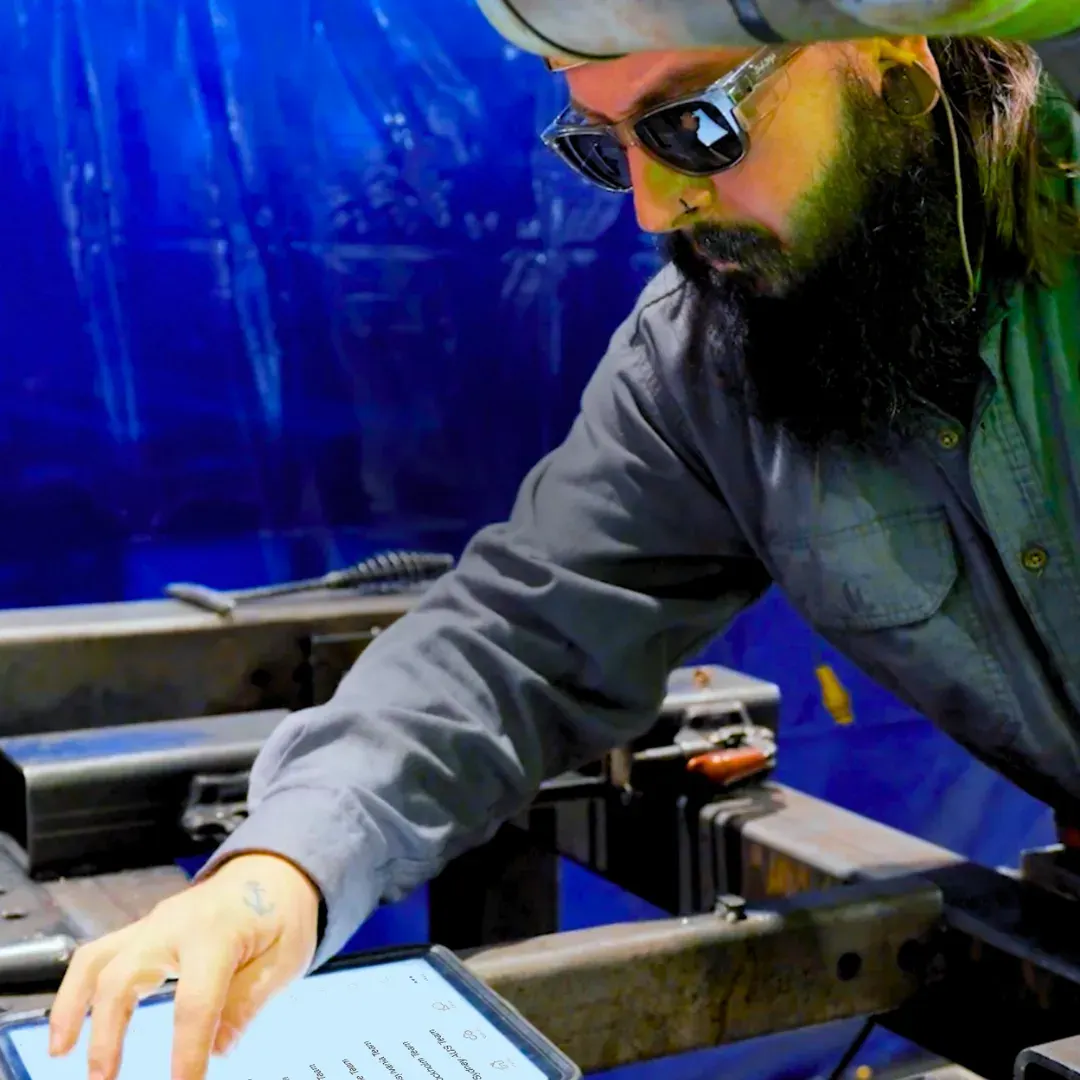
Hirebotics Cobot Welder systems were deployed across multiple Tate plants — more than 58 cobots in total — running on the Beacon platform, sharing programs, parameters, and Enhanced Playlists in real time across Arkansas, Virginia, and Kentucky.
The Results
What changed for Tate shows up at three levels: the floor, the plant, and the network.
12x per-welder throughput
From a third of a hack by hand to four full hacks a shift.
10–20 minutes to self-train
For a welder to self-train on the system, even first-timers.
More certified welders
Hired since cobots came online, not fewer.
One Tate standard
Programs and parameters shared live across three plants.
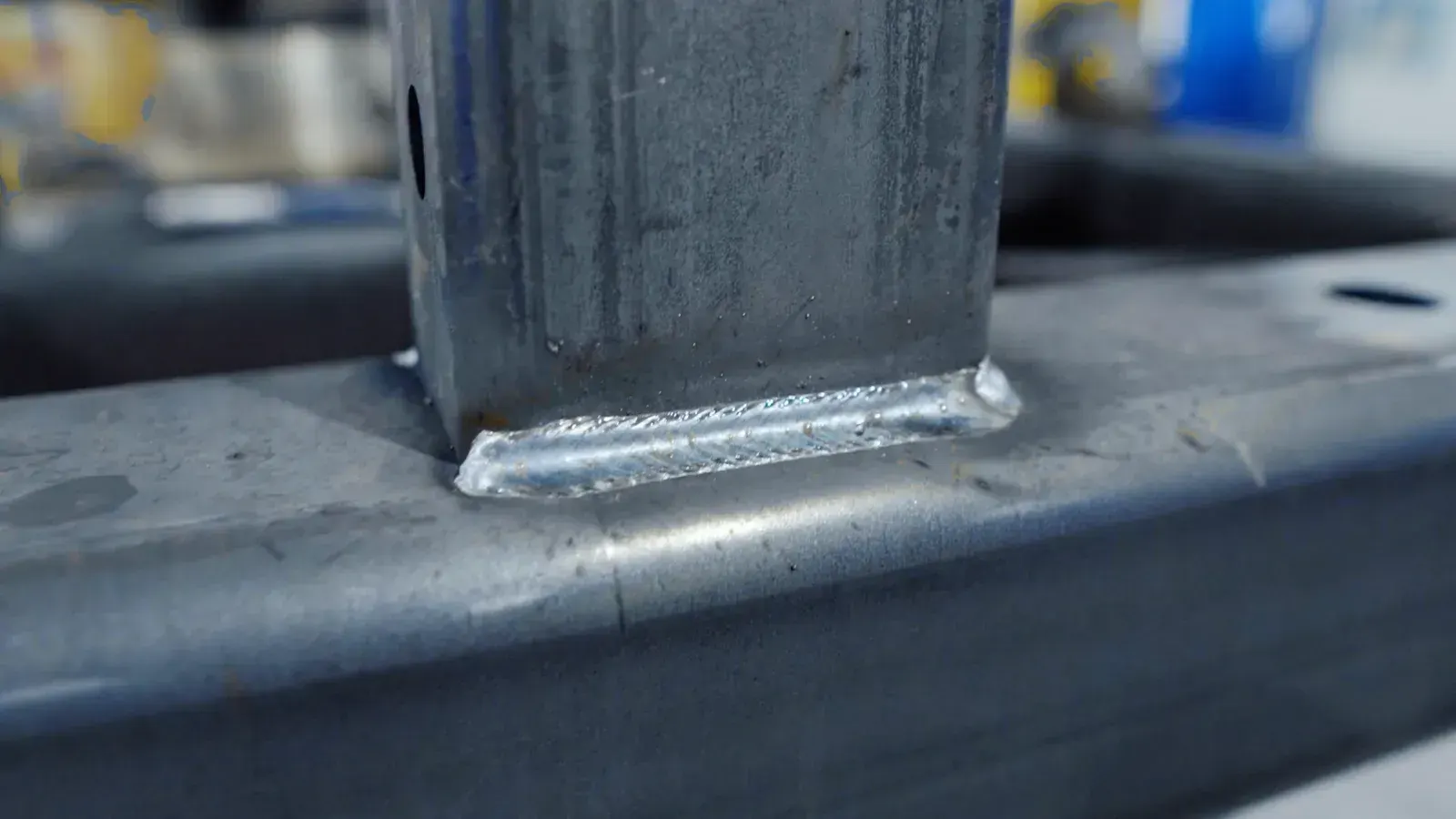
At the floor level, the cobots run the same way every shift. Critical-to-quality measurements hold to the same tolerances shift after shift, and the rework that used to come from welder-to-welder variability is gone. Welders trained themselves on the system in 10 to 20 minutes — even welders who'd never used a cobot before.
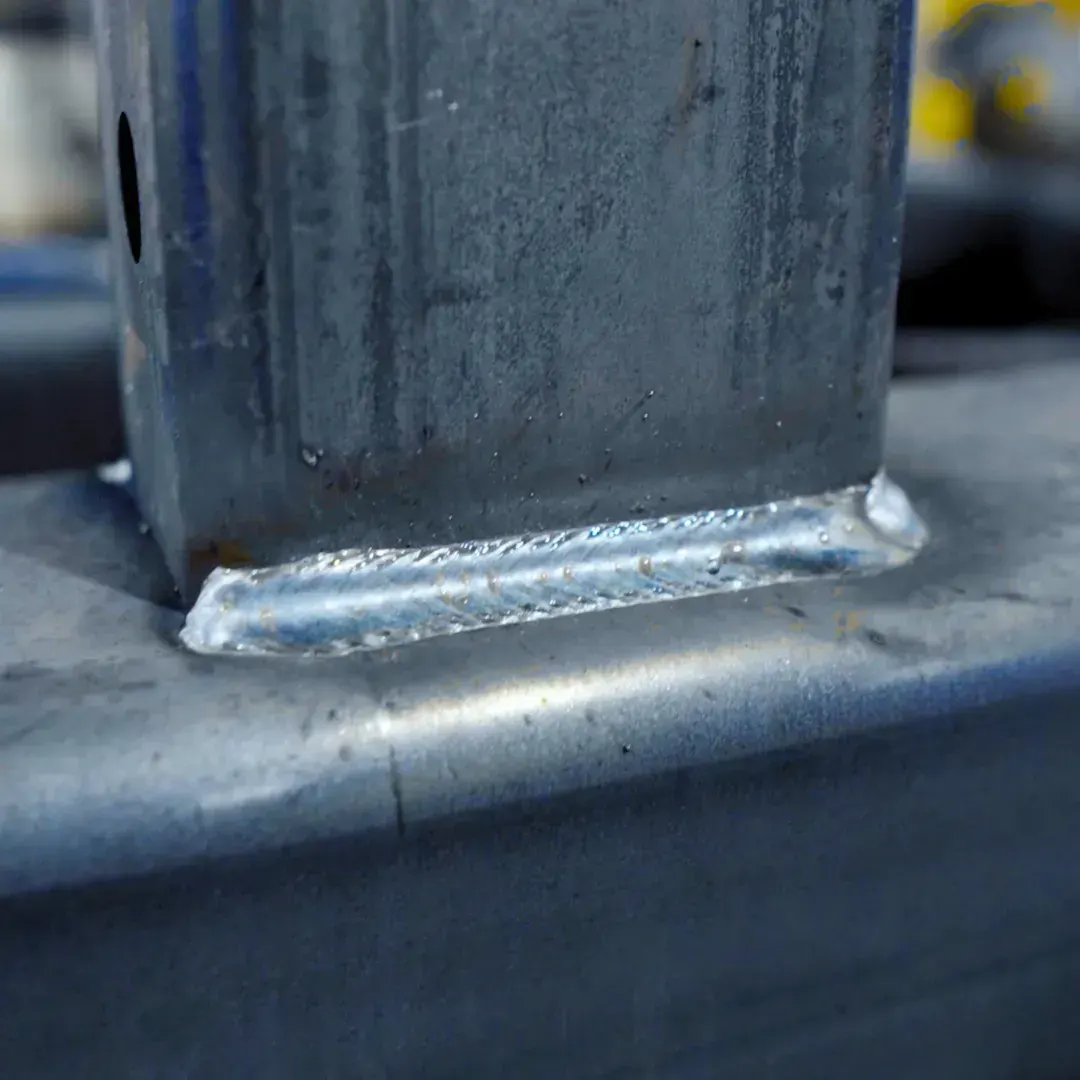
"When you look at a cobot finish weld versus a hand weld, it doesn't matter who's pushing that button. You're always going to get the same results. When you stay with that consistency and follow the program, there is no rework."
– Shahram Totonchian, Plant Manager, St. Paul, VA
At the plant level, Beacon becomes a governance layer. Tate uses Beacon Pro's Custom Operator Roles, Team Operator Role, and role-based access to define who can edit and run weld programs. Operators with edit access — including welders using Fine Tune Points to dial in torch angles and weld path offsets — are responsible for ensuring every detail of a program is exactly correct. Every other operator on the floor can press play with full confidence in what weld comes out the other end. The platform encodes the precision discipline that Tate's entire model rests on.
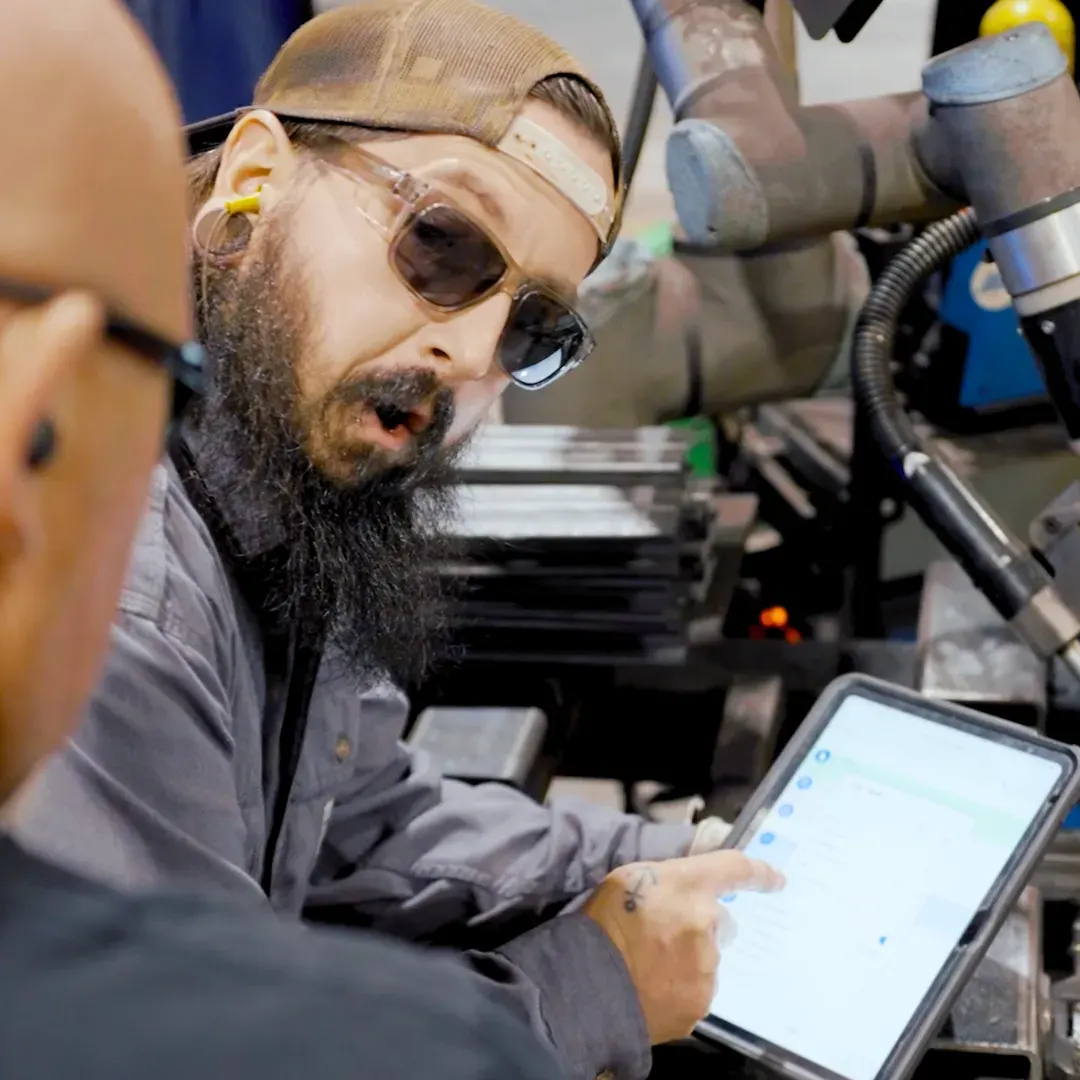
"We can control the amperage. We can control the heat that's going into it. We can control the travel speed. We can manipulate and curate every single weld that we make here for Tate to be exactly how it's supposed to be, as by spec every single time."
– Jonathon Cook, Cobot Welding Programmer
At the network level, Beacon connects the three plants. A program developed in Arkansas is available in Virginia immediately. Enhanced Playlists are shared across sites. Parameter minimums and maximums are set centrally and enforced everywhere. Production leaders monitor the gas use, wire use, output, and custom charts of any plant via the Beacon app without running out to the floor.
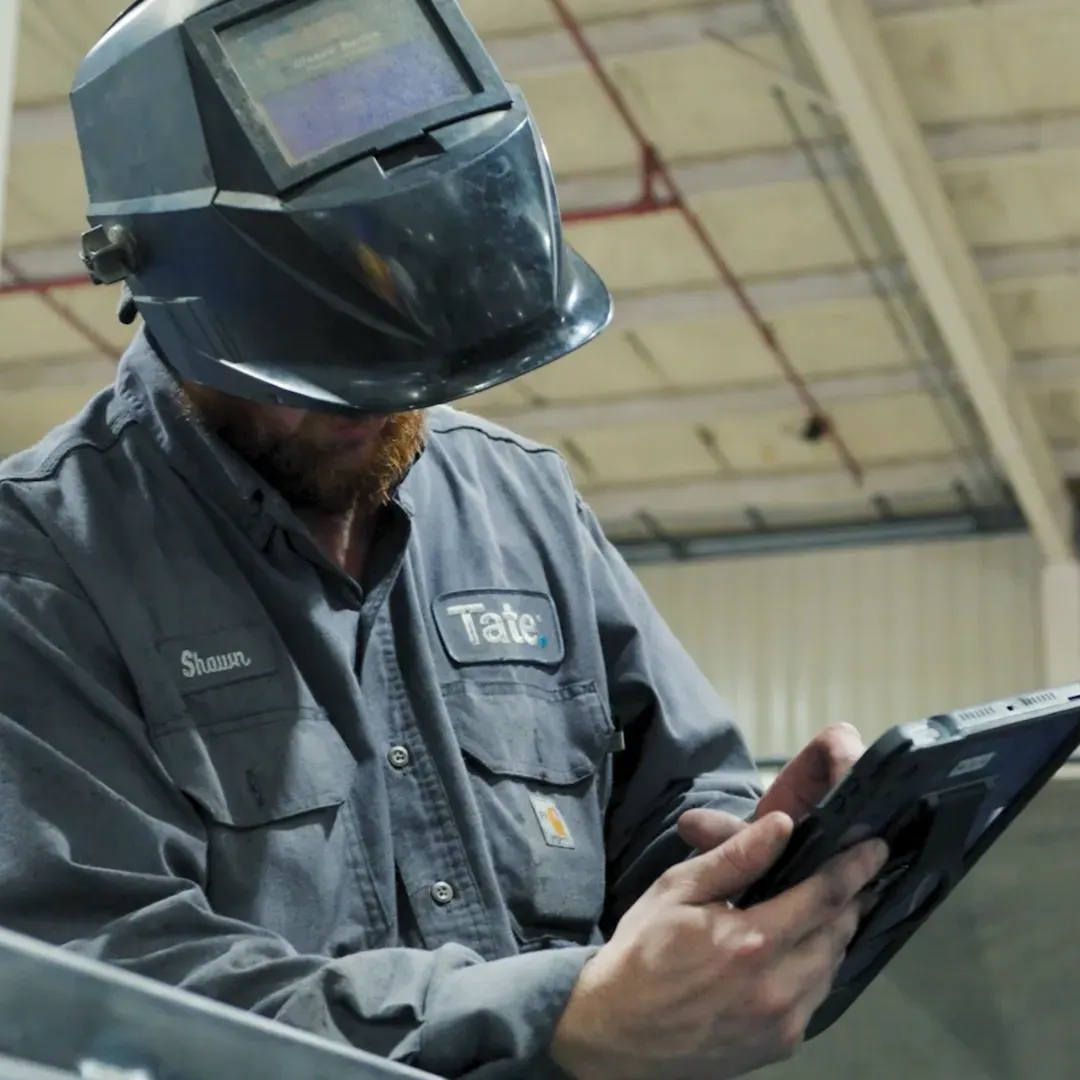
"I can, through the Beacon app, share weld parameters to different sites in real time. We can just kind of make a Tate standard, which is pretty [much] what we have done. And you can set minimums and maximums. They can't vary outside of that. And you're guaranteed to get a good weld every time."
– Curtis Ward, Fabrication Production Manager
In Arkansas, the workflow goes a step further: cobots tack and pre-assemble structural parts before they move to industrial automation for finish welds. The cobots are the precision step that enables industrial robots to run at the pace and accuracy the schedule requires.
Best of all, the people on the floor haven't been replaced. Tate has hired more certified welders since cobots came online, not fewer. The cobots take on the high-repetition work; the welders take on the work that demands certification, judgment, and the hands-on craft Tate's reputation rests on. The mix grew the team, and the working conditions made recruiting easier.
"That's part of the selling point for me to recruit new welders here, that you're not going to be under the hood all day. And that's a huge selling point for us because I don't want to be 120 degrees being under the hood."
– Shahram Totonchian, Plant Manager, St. Paul, VA
What's Next
Welding today, painting next
After two years of welding on Beacon, Tate asked Hirebotics a simple question: can we paint with it? That conversation is part of why Cobot Painter exists, and Tate will be among the first operations putting it to work — same platform, same role-based access, same operators stepping onto a new cobot already knowing the system. The network Tate built for welding is the same one it will grow into painting on, without relearning a thing.
"I'd never seen one till two years ago. And now I'm a firm believer."
– Chuck Goodson, Lead Welder
Planning a rollout across your own plants? See the enterprise path.
From the floor